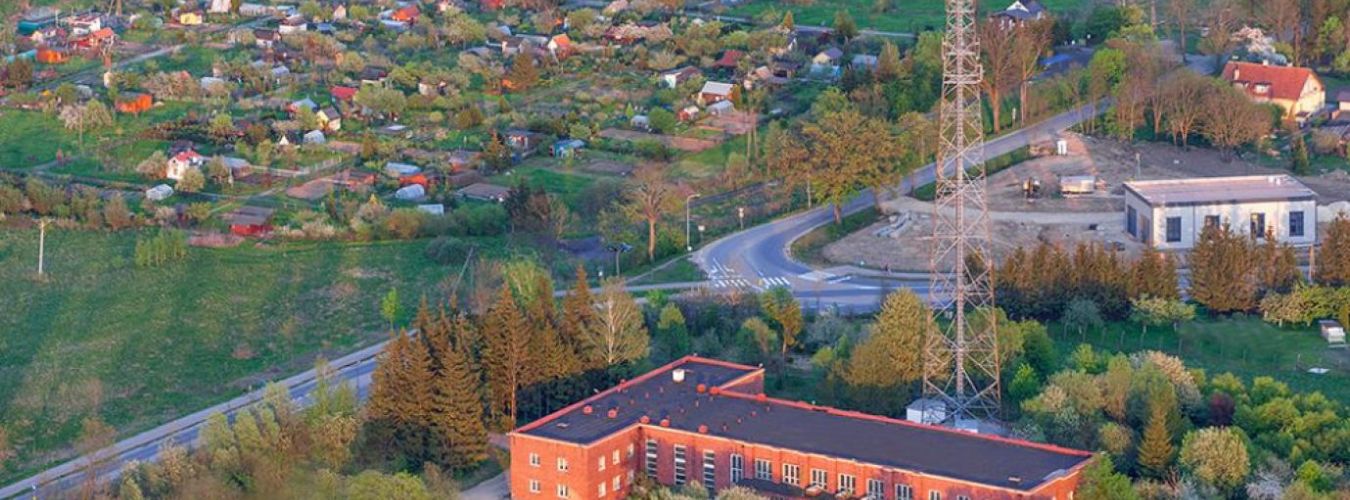
What are brownfield properties?
Post-industrial properties encompass a broad range of facilities that once served manufacturing, technical, or logistical functions and have now lost their original purpose. These are often areas in highly attractive locations that have been absorbed by expanding city centers over the years.
The most common types of post-industrial properties
Contrary to popular belief, these aren't just abandoned red-brick factories. This category also includes former telephone exchanges, technical infrastructure facilities, high-bay warehouses, and transportation depots. Each of these building types has a different structural design, which directly impacts their potential future use.
Why are investors interested in post-industrial properties?
The main attraction for capital in this sector is the unique combination of location and architecture. Many of these facilities offer technical parameters difficult to achieve in new construction, such as above-standard floor heights, high ceiling load-bearing capacity, and access to high-capacity power connections.
Adaptive potential and growing demand
Investors see enormous adaptability in these facilities. Former warehouses are being transformed into fashionable lofts, industrial-style offices, cultural centers, and modern "last mile logistics" spaces. Demand for these unique spaces is constantly growing, making them an attractive asset in investment portfolios.
You can read more about market trends in the article: Real Estate Investments in Poland: The Most Popular Investment Choices
Costs related to investing in post-industrial real estate
The financial analysis of a revitalization project differs from that of a new development investment. While the purchase price of the property itself can be attractive and often lower than for building plots in the same area, modernization costs play a key role.
Purchase, modernization and formalities
The budget must take into account not only the purchase price but, above all, the costs of adapting the building to current technical, fire protection, and energy standards. A change in use is often necessary, which involves administrative procedures. In the case of technical facilities sold, for example, by telecommunications operators, the issue of OPR (retaining some infrastructure) may also be considered. This, on the one hand, reduces the purchase price but, on the other, requires consideration of the fit-out in the design.
The main risks of such an investment
Every real estate investment involves risk, but the post-industrial market is particularly demanding in this respect.
Technical, environmental and legal risks
The most serious threats include hidden structural defects and environmental issues, such as potential soil contamination, which may require costly remediation. Equally important is the legal status. Many abandoned properties have unclear ownership structures. Therefore, it's crucial to buy from reputable institutions, which eliminates legal risks. Learn how to safely begin your investing adventure in the guide: How to Invest in Real Estate – How to Get Started and What to Choose?
When is it profitable to invest in post-industrial real estate?
Revitalizing post-industrial buildings is a worthwhile endeavor, provided the investor has a sound business plan and is purchasing the property from a reliable source. The keys to success are the location and the concept for the building's "second life."
If you're looking for properties with a clear legal status and great potential for adaptation, check out current listings at: Real Estate for Sale - Online Offers | Orange Nieruchomości. A well-chosen post-industrial property can become the showcase of your investment portfolio, generating stable profits for years to come. An interesting example is the offer of a large investment plot in Lidzbark Warmiński: Investment plot for sale Lidzbark Warmiński, Jarosława Dąbrowskiego Street 19
FAQ – Frequently Asked Questions
1. What documents are needed when purchasing a post-industrial property?
The basis for verification is a verification of the land and mortgage register, an extract and a map from the land register, and the Local Spatial Development Plan. In the case of technical facilities, it is also worth asking the seller for the building's technical documentation and information on any transmission and use easements (OER).
2. Can post-industrial properties be converted for service or logistics purposes?
Yes, this is one of the most common adaptation options. However, this option depends on the provisions in the Local Spatial Development Plan or obtaining planning permission. Due to their construction (high ceilings, large spaces), post-industrial facilities are often ideal for warehouses or offices.
3. Is it worth buying post-industrial properties from tenders?
Purchasing through a tender or auction from large institutional entities (e.g., state-owned companies or telecommunications operators) is usually the safest way to acquire such real estate. This ensures transparency in the process and provides certainty as to the legal status of the property being sold.